Fabric & construction
Is polyester underwear bad for you? A straight answer from a brand that uses it
Key takeaways
- We sell a polyester-elastane brief, so treat this page accordingly — and then check it against the sources at the bottom, which is the only reason to trust any page on this question.
- The well-supported part: polyester does not absorb much moisture, so it moves sweat to the surface rather than holding it, and it keeps its shape far better than cotton over a day of wear.
- The genuine downside: the same low absorbency means odour-causing bacteria sit on the fibre surface, which is why synthetic garments often smell faster than cotton ones between washes.
- The claim that polyester underwear lowers testosterone or causes infertility traces back to a very small body of work by a single researcher in the 1990s. It has not been replicated at scale, and it is not a basis for a health decision.
- For skin irritation, fit and moisture matter more than fibre type: a damp, tight, seam-heavy garment irritates skin whatever it is made of.
- There is no single 'healthiest' fabric. Cotton is more breathable and less odour-prone; synthetics manage moisture and hold their shape. The right answer depends on what you're doing in them.
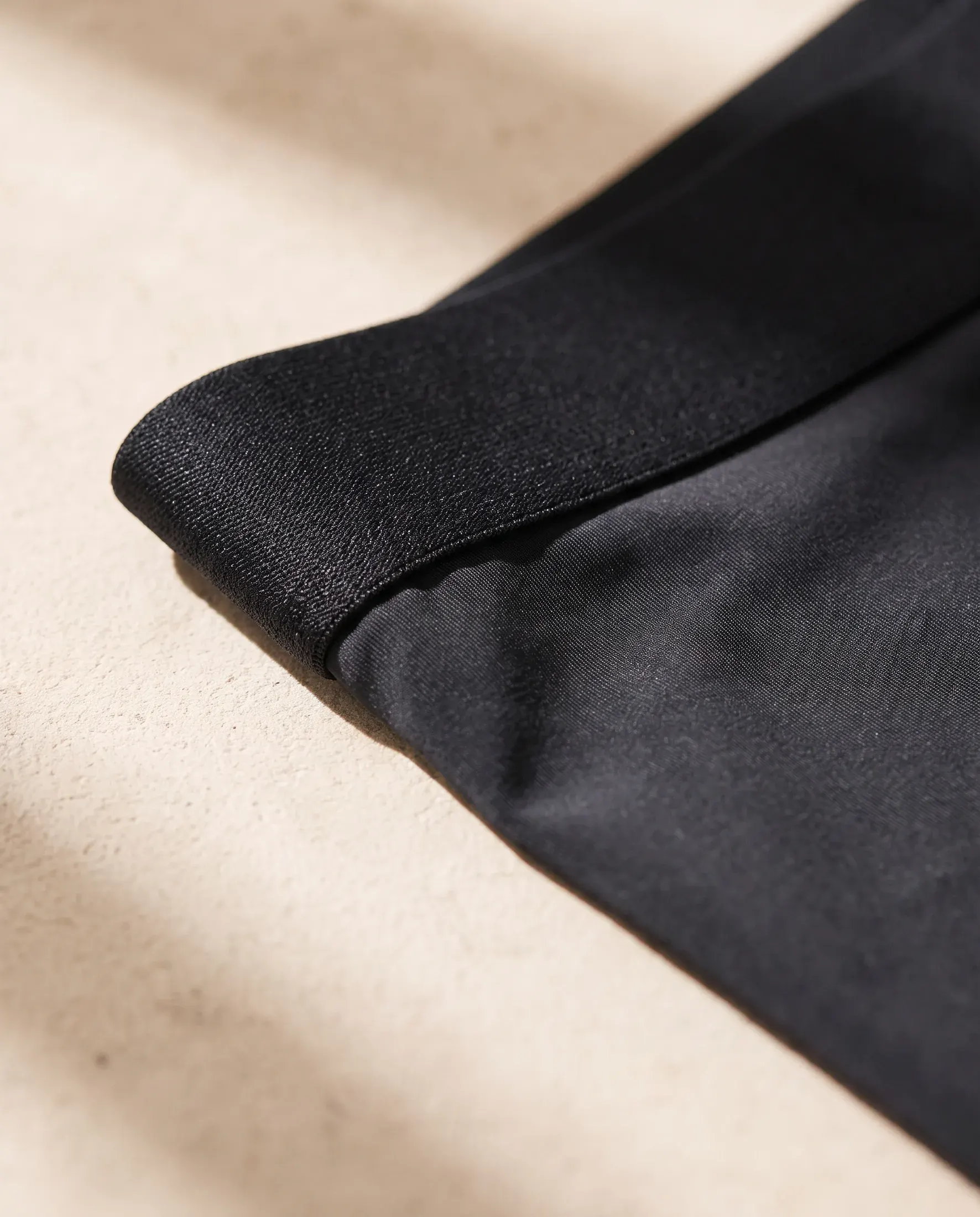
Is polyester underwear bad for you?
For most men, no — polyester underwear is not harmful. It has real, specific drawbacks: it holds odour more than cotton, it feels warmer in humid heat, and it sheds microplastics in the wash. What it does not have is credible evidence of harm to fertility or hormones at the level of normal daily wear.
This page is written by a brand developing a polyester-elastane boxer brief, which is exactly the reason to read it sceptically. So rather than ask you to take our word for anything, we have separated what is well established from what is weakly evidenced, and listed our sources at the bottom. Where the honest answer is unflattering to our own material, we have said so.
| Claim | How well supported | What that means in practice |
|---|---|---|
| Polyester moves moisture off skin rather than absorbing it | Well established — a basic property of the fibre | Feels drier in activity; the sweat goes to the surface to evaporate |
| Polyester holds odour more than cotton | Well established and widely reported | Real drawback. Wash after each wear; don’t re-wear a gym pair |
| Synthetics shed microplastic fibres in the wash | Well established | An environmental cost, not a personal health one |
| Polyester causes skin irritation | Depends on fit and moisture, not fibre alone | Trapped damp and friction irritate skin in any fabric |
| Polyester underwear lowers testosterone or causes infertility | Weak — traces to a small 1990s body of work, not replicated at scale | Not a sound basis for a decision either way |
Does polyester underwear affect testosterone or fertility?
The evidence usually cited for this is a small set of studies published by a single researcher in the 1990s, involving very small numbers of participants. It is frequently quoted online and rarely described accurately. It is not strong enough to support a confident claim in either direction.
When you see this claim repeated — and it is repeated constantly, often by brands selling cotton or bamboo — it nearly always traces back to the same source. The work involved small participant counts, was not large-scale or independently replicated, and the proposed mechanism involved electrostatic effects on tissue. That is a long way from established science.
The related and better-studied question is heat. Testicular temperature does matter for sperm production, and prolonged heat exposure is a genuine factor. But the variable there is how tight and how insulating a garment is, not whether the fibre is a polymer or a plant. A tight cotton brief and a tight polyester brief trap heat similarly; a loose pair of either traps less.
Why does polyester underwear smell faster than cotton?
Because polyester absorbs very little moisture, sweat and the bacteria that feed on it stay on the fibre surface rather than being drawn into it. Those bacteria produce the compounds you smell, and surface-bound residue is harder to rinse out than residue held inside a cotton fibre.
This is the most honest criticism of synthetic underwear and the one we least enjoy writing. It is a real, repeatable, well-documented property of the fibre, and any brand telling you their polyester garment is inherently odour-proof is overselling. Anti-odour finishes and treated yarns exist and help, but they are a treatment applied to a material, not a change in the material.
- Wash synthetic underwear after every wear — it is not a fabric that forgives a second day.
- Wash cool rather than hot: heat sets body-oil residue into synthetic fibres.
- Skip fabric softener, which leaves a coating that traps odour rather than releasing it.
- Don’t leave a damp pair balled up in a gym bag; that is where most of the smell is actually created.
- If a pair has developed a permanent smell that survives washing, it is finished. That is the real end of its life, not a hole.
Is cotton better than polyester for underwear?
Neither is better overall — they fail in opposite directions. Cotton is more breathable and resists odour longer, but absorbs sweat and holds it against skin, and loses its shape as the day goes on. Polyester moves moisture and holds its fit, but traps odour and feels warmer in humid heat.
| Cotton | Polyester / elastane blend | |
|---|---|---|
| Moisture | Absorbs and holds it against skin | Moves it to the surface to evaporate |
| Odour between washes | Resists longer | Traps faster — the main drawback |
| Fit at the end of a day | Relaxes and loosens as it warms | Holds shape if the knit has real recovery |
| Feel in humid heat | Breathable, but damp once you sweat | Drier, but can feel warm and close |
| Drying time | Slow | Fast — the reason it wins for travel |
| Environmental cost | Water and land in growing | Microplastic shedding in the wash |
The practical version: if you sit in air conditioning and change daily, cotton is perfectly good and will smell better on day-old wear. If you sweat, move, travel, or want the fit you put on in the morning to still exist at six in the evening, a fine synthetic knit does that better. Most men would be best served by owning both and not thinking of it as a moral choice.
What actually matters more than the fibre
Fit, moisture and washing habits affect comfort and skin far more than whether a garment is cotton or polyester. A damp, tight, seam-heavy pair will irritate skin in any material, and a clean, well-fitting, dry one rarely does in any material.
- Does it stay dry? Trapped moisture against skin is the single biggest driver of irritation and odour.
- Does it fit? Compression at the waistband or leg hem does more visible damage to skin than fibre choice.
- Where are the seams? A seam sitting on a friction point will chafe regardless of what it is made of.
- How often is it washed, and how? Cool wash, no softener, dried properly.
- How old is it? A knit that has lost its recovery no longer fits, whatever it is made of.
Frequently asked questions
Is polyester underwear bad for men?
For most men it is not harmful. It has real drawbacks — it holds odour more than cotton, feels warmer in humid heat and sheds microplastics in the wash — but there is no credible large-scale evidence that normal daily wear harms health.
Does polyester underwear lower testosterone?
The claim traces to a small body of work by one researcher in the 1990s that has not been replicated at scale. It is repeated widely online, often by brands selling other fabrics. It is not strong enough to support a confident claim in either direction.
What underwear material should men avoid?
There is no material that men should categorically avoid. The more useful rule is to avoid a pair that stays damp, fits too tight at the waistband or leg, or has gone too long without being replaced — those cause far more real-world discomfort than fibre choice.
What is the healthiest fabric for men’s underwear?
There isn’t a single answer, and anyone who gives you one is usually selling that fabric. Cotton is breathable and resists odour longer; fine synthetics manage moisture and hold their shape. Both are fine when clean, dry and correctly sized.
Why does my polyester underwear smell even after washing?
Body oils bind to synthetic fibres and can survive a normal wash, especially a hot one, which sets residue rather than removing it. Wash cool, skip fabric softener and don’t leave damp pairs in a bag. If the smell survives anyway, the garment is finished.
Is polyester or cotton better if I sweat a lot?
A fine synthetic knit generally handles heavy sweating better, because it moves moisture to the surface to evaporate instead of absorbing and holding it. The trade-off is that it needs washing after every wear.
Where these numbers come from
- Fibre moisture properties
- Standard textile-science characteristics of polyester (low moisture regain) versus cotton (high absorbency). General material properties, not measurements of any specific garment.
- Odour retention in synthetics
- A widely reported and repeatedly observed property of synthetic fibres: low absorbency leaves odour-causing bacteria and body-oil residue on the fibre surface.
- Fertility and hormone claims
- Traced to a small body of work published by a single researcher in the 1990s with very small participant numbers, not independently replicated at scale. We describe its size and limits rather than quoting figures from it.
- Our own product
- The Everyday Brief is in development and has not been tested for odour, moisture or durability. Nothing on this page is a performance claim about it.
The product behind these guides
The Everyday Brief
Low-rise, no-fly, black, sizes S–XXL. In development — the specs we’ve confirmed and the ones we haven’t are listed on the product page.
Want to know when it’s real?
We’ll email you once, when The Everyday Brief goes on sale. Nothing else.