Problem solving
How to stop underwear chafing
Key takeaways
- Chafing needs three things at once: skin-on-skin or fabric-on-skin friction, moisture, and enough repetitions. Remove any one of the three and it stops.
- Coverage is the most reliable change you can make — a leg long enough to keep thigh skin from touching thigh skin removes the friction surface entirely.
- Moisture is what turns tolerable friction into damage, so a fabric that dries quickly usually beats a fabric that feels soft but holds water.
- Flat or bonded seams matter at the inner thigh and crotch, where a raised seam becomes a cutting edge once the skin is damp.
- Anti-chafe balms work by reducing friction directly, and they are the fastest fix while you change everything else.
- Broken skin, bleeding, spreading redness, pus or a rash that does not settle in a few days is a medical question, not an underwear question — see a doctor.
Why does underwear chafe?
Chafing happens when repeated rubbing removes the outer layer of skin, and moisture accelerates it by softening the skin and increasing friction. Underwear is involved either because it leaves thigh skin exposed to rub together, or because its own fabric and seams do the rubbing.
That gives you two distinct problems with different fixes. Skin-on-skin chafing at the inner thigh is solved by covering the skin. Fabric-on-skin chafing — a seam line, a rolled hem, a wet waistband — is solved by changing what the garment does at that point.
| Where | Most likely cause | First thing to change |
|---|---|---|
| Inner thighs, both sides | Skin-on-skin contact | A cut with a longer leg that covers the contact area |
| A single line on one thigh | A seam or a rolled leg hem | Flat or bonded hems; check the hem isn’t rolling |
| Crotch and groin creases | Trapped moisture plus movement | A faster-drying fabric; change out of damp kit |
| Under the waistband | A tight or rough band, often when damp | A wider, flatter band; check the size at the waist |
| Only on long, hot days | Time and sweat, not the garment | Balm, a spare pair, and a fabric that dries |
The single most effective change: coverage
If your thighs touch when you walk, the most reliable fix is a leg long enough to keep skin from meeting skin. No fabric treatment substitutes for removing the contact surface.
This is why the advice you see from runners, hikers and larger men converges on the same answer: a longer-leg boxer brief, not a trunk and not a brief. The leg has to be long enough to stay between your thighs through a full stride, which means it also has to stay put — a leg that rides up is a leg that stops covering you exactly when you need it.
What fabric to choose if you chafe
Choose a fabric that moves moisture away and dries quickly, with flat or bonded seams at the inner thigh. Wet cotton is the classic chafing fabric: it absorbs sweat, holds it against the skin, and gets heavier and rougher as the day goes on.
- Fine synthetic knits (polyester or nylon with elastane) move moisture along the fibre and dry fast.
- Merino wool is the usual natural alternative: it handles moisture well and resists odour, but wears out faster.
- Cotton is comfortable dry and the worst option once it is wet — the more you sweat, the less it works.
- Seam placement beats seam count: one flat seam away from the contact area is better than four “seamless-looking” bonded edges in the wrong place.
We compare the two most common choices in detail in our guide to microfibre versus cotton underwear, including the trade-off synthetics make on odour.
What to do on the day
On a day you cannot change your underwear choice, reduce friction directly and reduce time spent damp: apply an anti-chafe balm before you start, and carry a dry pair if the day is long.
- Apply a friction balm or powder to the contact area before you leave, not after it starts hurting.
- Start dry. Putting on a damp pair from a gym bag is the most common own goal.
- Change out of sweat-soaked underwear as soon as the activity ends.
- Rinse and dry the skin properly; leave it exposed to air where you can.
- If the skin is intact but sore, give it a day in loose clothing before repeating the activity.
What to look for when buying underwear to prevent chafing
Buy for coverage, drying speed and seam placement, in that order — and buy one pair before you buy five, because thigh shape decides whether a given leg length works for you.
| Feature | Why it matters | What to avoid |
|---|---|---|
| Leg length past the contact area | Removes skin-on-skin friction | Short trunk legs if your thighs touch |
| Fast-drying knit | Moisture is the accelerant | Heavy cotton for long or hot days |
| Flat or bonded hems | No cutting edge when damp | Narrow elastic hems that roll |
| Correct waist size | Stops the whole garment being dragged up | Sizing up “for comfort” |
| A single test pair | Thigh shape decides the outcome | Buying a multipack untested |
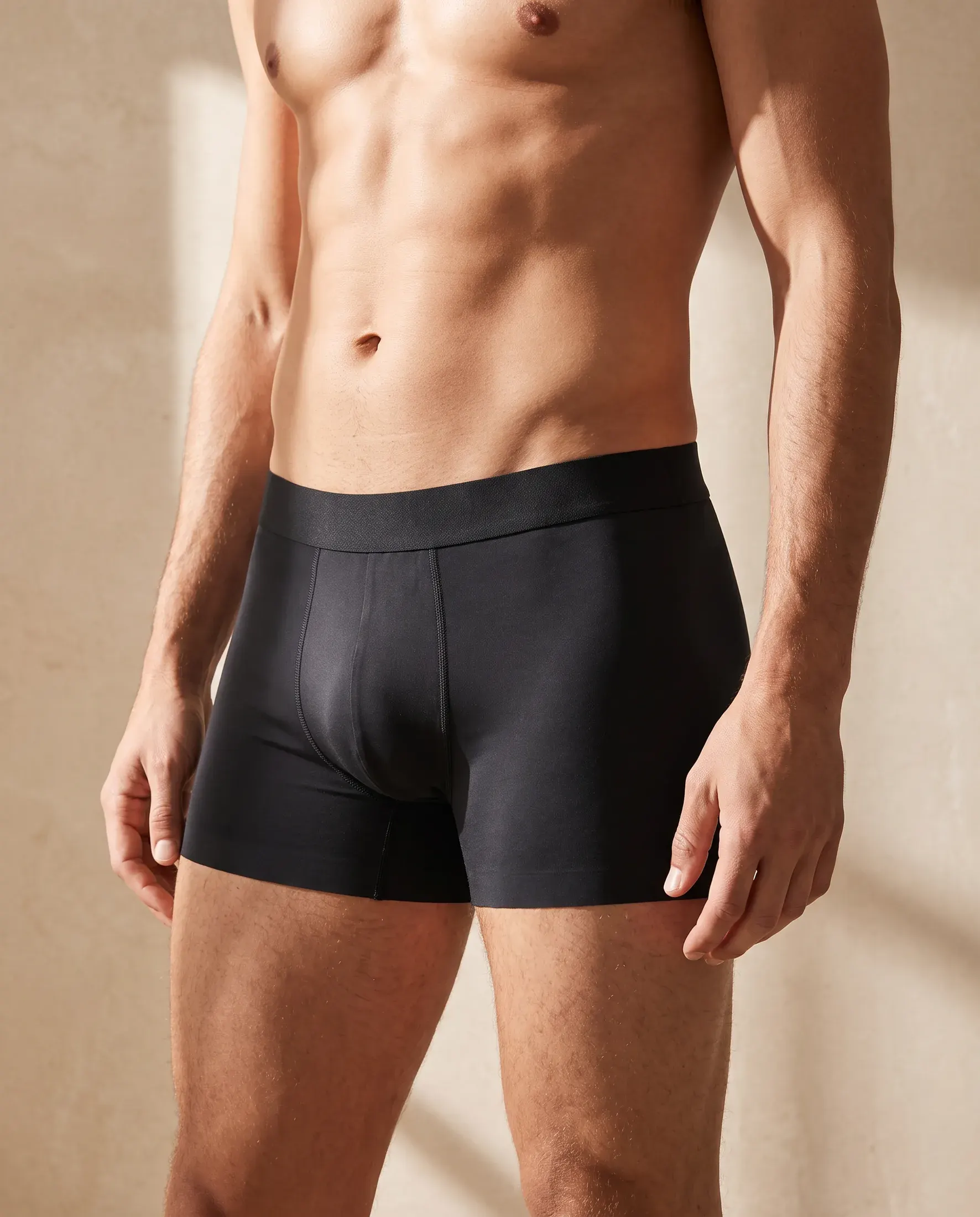
The Everyday Brief is a low-rise, no-fly boxer brief with a flat leg hem, built in a fine knit. We have not run chafing trials, so we make no anti-chafe claim for it — the design choices above are what we control, and the evidence is what we will publish when we have it.
Frequently asked questions
How do I stop my underwear from chafing?
Cover the contact area with a longer leg, switch to a fabric that dries quickly, make sure the hems are flat rather than rolled elastic, and use a friction balm on days you cannot avoid heat or distance. Most cases resolve with coverage plus a drier fabric.
Why is my underwear rubbing me raw?
Something is rubbing the same patch of skin repeatedly while it is damp. Look for a rolled leg hem, a seam sitting at the inner thigh, or thigh skin making contact directly. Damp skin abrades far faster than dry skin, which is why it often starts hours into a day.
Will chafing go away by itself?
Mild chafing usually settles in a few days once the rubbing stops and the skin stays dry. Broken skin, spreading redness, pus, or a rash that keeps coming back needs a doctor — those are not chafing any more.
Do anti-chafe creams and balms work?
Yes, for what they do: they reduce friction at the skin surface for a number of hours. They are a good same-day fix and a reasonable habit for long activity, but they do not address a cut that leaves your thighs uncovered.
What underwear is best for chafing in hot weather?
A boxer brief with enough leg to cover where your thighs meet, in a fine synthetic or merino knit that dries fast, with flat hems. Heat matters mostly because it means more sweat, and moisture is what turns friction into damage.
Is cotton or synthetic better for chafing?
Synthetic, in almost every case where sweat is involved. Cotton absorbs and holds moisture against the skin; a fine synthetic knit moves it and dries. Cotton is more comfortable only while it stays dry.
Where these numbers come from
- Friction and moisture
- That chafing is driven by repeated friction plus trapped moisture, and that skin-on-skin contact is the usual trigger, is well established and widely reported in sports-medicine guidance. General principles, not a specific trial.
- Medical limits
- Nothing on this page is medical advice. Persistent or broken skin is a question for a doctor, not an underwear brand.
The product behind these guides
The Everyday Brief
Low-rise, no-fly, black, sizes S–XXL. In development — the specs we’ve confirmed and the ones we haven’t are listed on the product page.
Want to know when it’s real?
We’ll email you once, when The Everyday Brief goes on sale. Nothing else.