Care & ownership
What actually makes men’s underwear worth paying more for
Key takeaways
- Four things separate a good pair from a cheap one: the yarn, the knit’s recovery, the waistband construction and the pattern. Only the last is visible in a photograph.
- Recovery — whether the fabric returns to shape after stretching — is the upgrade you feel most, because it decides whether the fit you had at 8am still exists at 6pm.
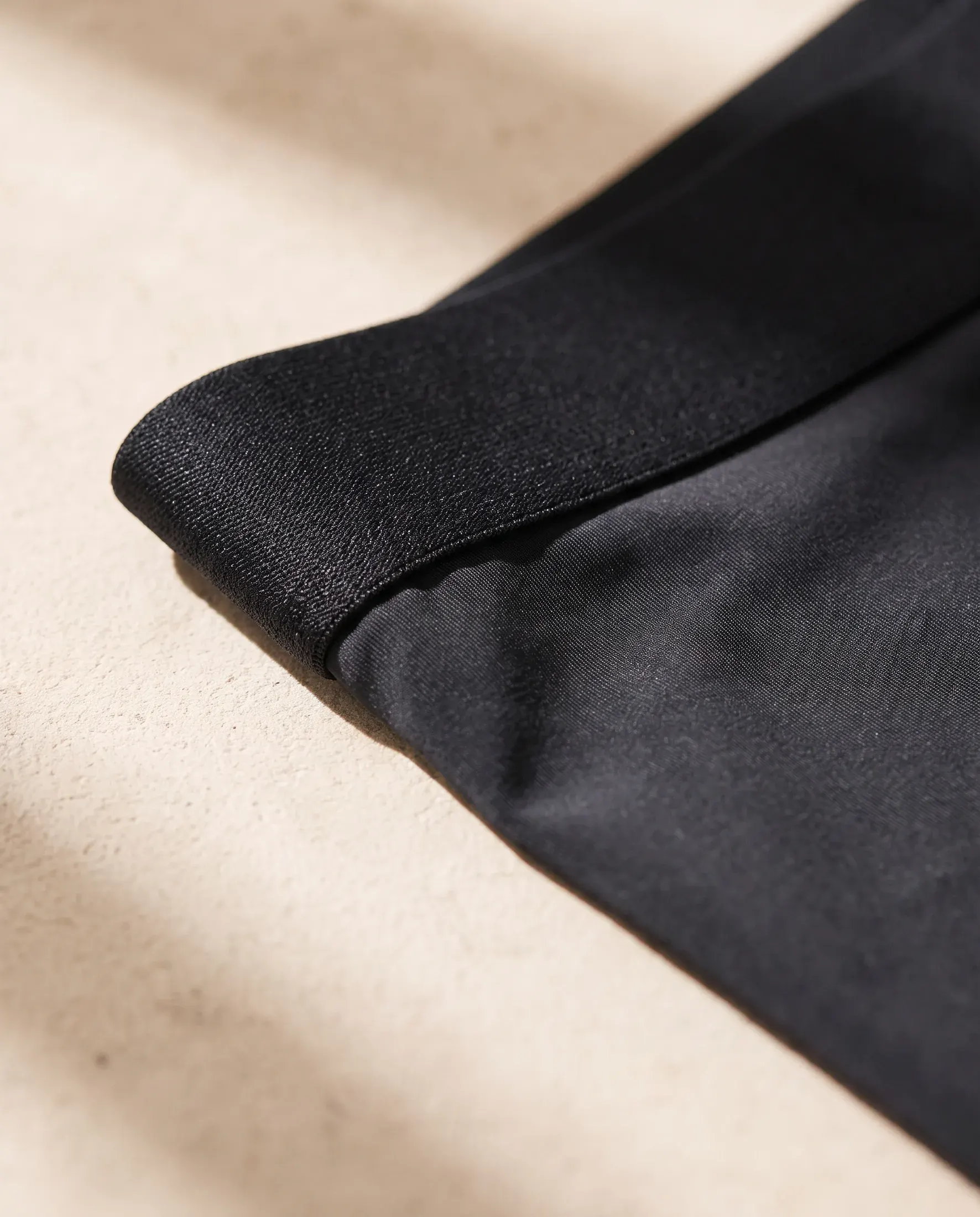
- The waistband is where cheap pairs fail first: a band that rolls into a cord or loses tension turns a wearable pair into a drawer filler.
- Price above roughly $30 a pair is usually buying brand, packaging and retail margin rather than more garment.
- Marketing language — “performance”, “technical”, “premium” — describes none of these four things and should be treated as noise.
- The only reliable test is wearing one pair for a full day and washing it ten times, which is why buying a single pair before a multipack is sensible.
Where does the money actually go?
In a pair of underwear, cost is driven by the yarn, the knitting, the waistband, the number of sewing operations and the pattern work behind the fit. Everything else on the price tag is brand, packaging, marketing and retail margin.
| Element | Cheap version | Better version | Can you feel it? |
|---|---|---|---|
| Yarn | Coarse fibre, inconsistent thickness | Fine filament, consistent, often with more elastane | Yes — surface smoothness, weight |
| Knit and recovery | Stretches and stays stretched | Returns to shape after every stretch | Yes — the fit at the end of the day |
| Waistband | Narrow elastic sewn on, rolls | Wide knitted band, bonded flat | Yes — pressure and rolling |
| Pattern and fit | Copied block, minimal grading | Graded per size, tested on bodies | Yes — riding up, bunching |
| Seam finishing | Overlocked, raised | Flatlocked or bonded | Sometimes — mostly at the thigh |
| Brand and packaging | Polybag | Box, campaign, retail margin | No |
Which upgrades you can actually feel
Recovery, waistband construction and pattern work. Those three decide whether a pair still fits at the end of a day and whether it survives fifty washes — and none of them photograph well, which is why they are undersold.
- Recovery: stretch the leg opening and let go. A good knit snaps back; a poor one stays loose and will do the same on your thigh by lunchtime.
- Waistband: fold it over. A wide knitted band lies flat; a narrow elastic band sewn inside a casing will roll into a cord.
- Pattern: look at where the leg seam sits. A pattern designed for a body curves; a cheap block runs straight and twists as you walk.
- Hand-feel: rub the fabric between finger and thumb. Fineness is the one thing a photograph genuinely cannot convey.
Where does the price stop buying you anything?
Somewhere above roughly $30 a pair, extra money mostly buys brand and retail experience rather than a better garment. The jump from a $5 multipack to a $20 pair is enormous; the jump from $30 to $60 usually is not.
| Price per pair | What usually changes | What usually doesn’t |
|---|---|---|
| Under $8 | Basic cotton, sewn elastic band | Recovery, fit grading, finishing |
| $8–$15 | Better cotton or a basic synthetic blend | Waistband quality is still the weak point |
| $15–$30 | Fine knit, elastane, wide flat band, graded fit | This is where the real gains sit |
| $30–$60 | Branding, packaging, retail margin, occasional fabric upgrade | Durability rarely doubles |
| Over $60 | Designer positioning | Almost nothing functional |
This is also a straightforward statement of where we are putting our own product. The Everyday Brief’s illustrative pre-launch pricing runs from $32.00 a pair down to $27.00 in a five-pack, which puts it in the band where construction is the thing you are paying for.
How to read the marketing
Translate every claim into a mechanism. If a brand cannot tell you what a word means physically — which fibre, which knit, which construction — the word is decoration.
| Claim | Ask | Acceptable answer |
|---|---|---|
| “Moisture wicking” | Which fibre and knit? | Fine polyester or nylon; the knit spreads moisture to evaporate |
| “Breathable” | Weight and knit structure? | A stated fabric weight and an open knit |
| “No ride up” | What holds the hem? | Leg length and a flat bonded hem — not a slogan |
| “Anti-odour” | Treatment or fibre? | Merino, or a named treatment with a wash-durability figure |
| “Premium cotton” | Staple length or grade? | A named grade; otherwise it means nothing |
| “Tested” | By whom, how many, what protocol? | A published method and sample size |
How to buy without wasting money
Buy one pair, wear it for a long day, wash it ten times, and only then buy the rotation. A multipack bought untested is the most expensive underwear there is, because it is the kind you do not wear.
- Check the returns policy before you check the price.
- Buy your measured size, not the size on your trousers.
- Wear the test pair on your hardest day — heat, distance, long sitting — not your easiest.
- Wash it the way you actually wash: same machine, same detergent, no special treatment.
- If it still fits and the band is still tight after ten washes, buy the rotation.
The arithmetic on how big that rotation should be is in our guide on how many pairs a man should own.
Frequently asked questions
Is expensive underwear worth it?
Up to a point. Moving from a cheap multipack to a well-constructed pair around $15–$30 buys real improvements in fabric recovery, waistband construction and fit. Above roughly $30 a pair, you are mostly buying brand and packaging.
What makes underwear expensive?
Finer yarn, a knit with genuine recovery, a wide bonded waistband, graded patterns tested on real bodies, and more sewing operations. After that: branding, packaging and retail margin, which cost you money without changing the garment.
Does expensive underwear last longer?
Usually, because the failure point is normally the waistband and the knit’s recovery, and both are where the money goes. It is not automatic — price alone guarantees nothing, and some expensive pairs are cheap garments with a logo.
How can I tell if a pair is well made before buying?
Stretch the leg opening and watch whether it returns; fold the waistband and see if it lies flat or rolls; feel the fabric fineness; look at where the leg seam sits. In an online listing, look for a stated fabric composition and a real size chart.
Is a multipack bad value?
Only when you buy it untested. A multipack of a pair you already know fits is the cheapest way to own underwear. A multipack of something you have never worn is how drawers fill with pairs nobody reaches for.
Where these numbers come from
- Price bands
- Approximate US retail prices per pair, offered as a guide to where returns diminish. Not derived from a market survey; we have not audited manufacturer costs.
- FEELAFTER pricing
- Illustrative pre-launch figures: $32 for one pair, $87 for three, $135 for five. Not live prices; orders are not open.
The product behind these guides
The Everyday Brief
Low-rise, no-fly, black, sizes S–XXL. In development — the specs we’ve confirmed and the ones we haven’t are listed on the product page.
Want to know when it’s real?
We’ll email you once, when The Everyday Brief goes on sale. Nothing else.